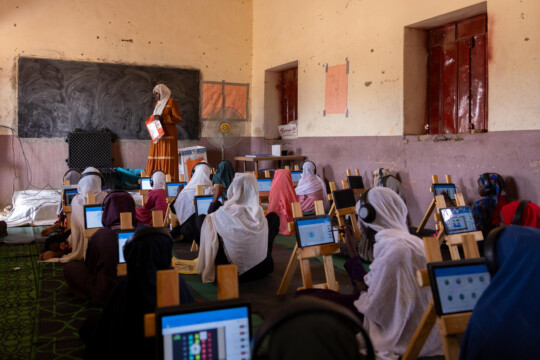
In School but Falling Behind?
What age, grade progression and foundational learning reveal about children’s learning pathways.

Why being in the right grade at the right time matters for learning
Children do not all move through school at the same pace. Some start late while others start early. Some repeat grades or fall behind. These patterns matter for learning.
Using MICS6 data from 45 countries, this story examines the relationship between children’s age, grade placement and foundational reading and math skills. It shows that children who are on track for their grade are generally more likely to demonstrate foundational skills than children who are older or younger than expected.
The story moves from overall patterns of age-grade misalignment to grade-level learning trajectories, showing that foundational skills consistently peak at the expected age for grade.
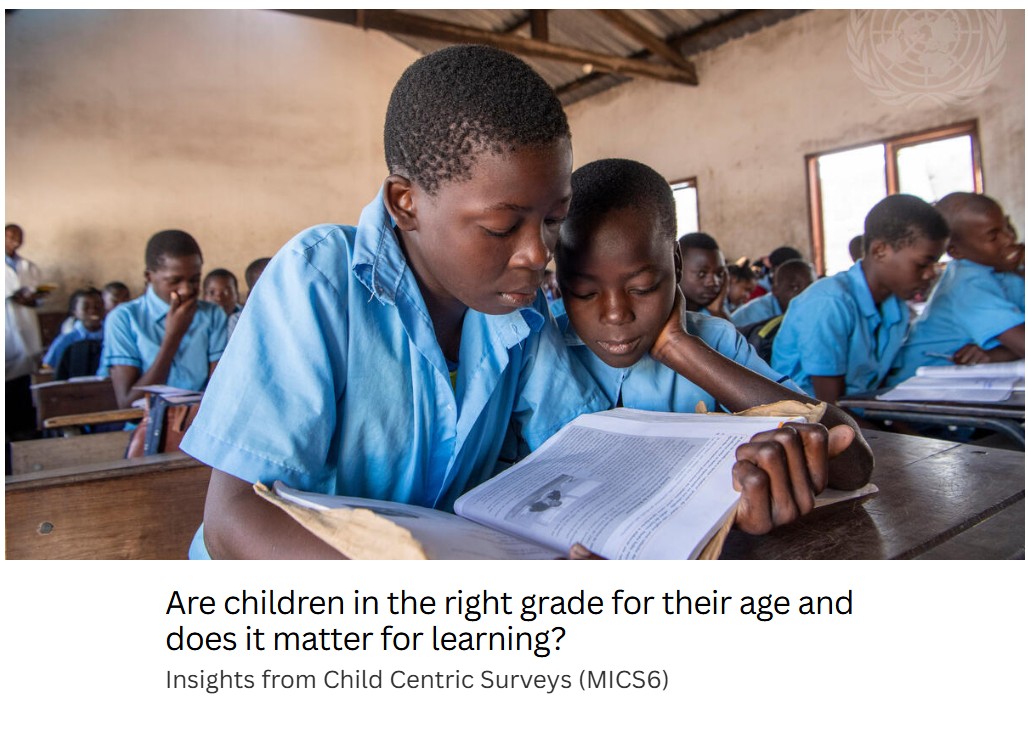
Story 1: Are children in the right grade for their age and does it matter for learning?
Getting children into school is not enough
School attendance remains one of the most important measures of education access. But high attendance alone does not guarantee that children are progressing through school at the pace needed to support learning.
This story explores how attendance, age-grade alignment, and foundational learning are connected across education systems. It also shows that poorer and rural children are more likely to be overage for their grade, reinforcing existing inequalities in learning.
The story argues that countries should aim not only for high attendance, but also for strong age-grade alignment.
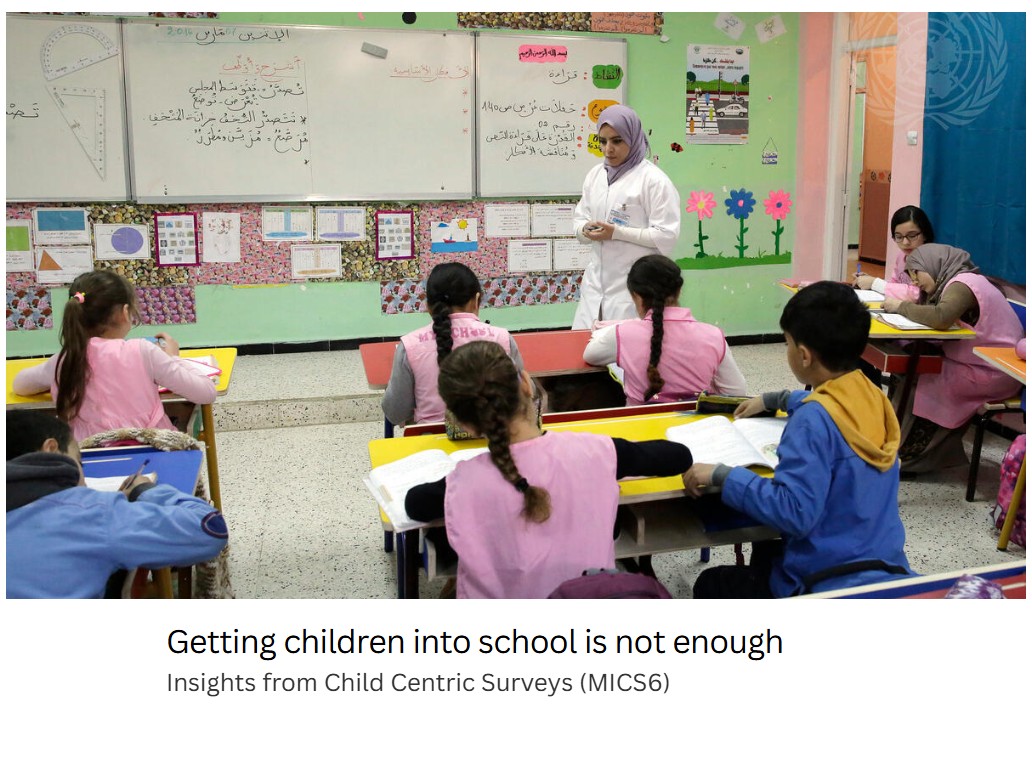
Story 2: Getting children into school is not enough
About the analysis
The analyses use data from the MICS6 Foundational Learning Skills (FLS) module, covering children aged 7 to 14 in countries and territories that implemented the module. Age-grade alignment is based on a child’s age relative to the expected age for their grade. Children are classified as on-track when within 1 year above or below the expected age for their grade.