Immunization
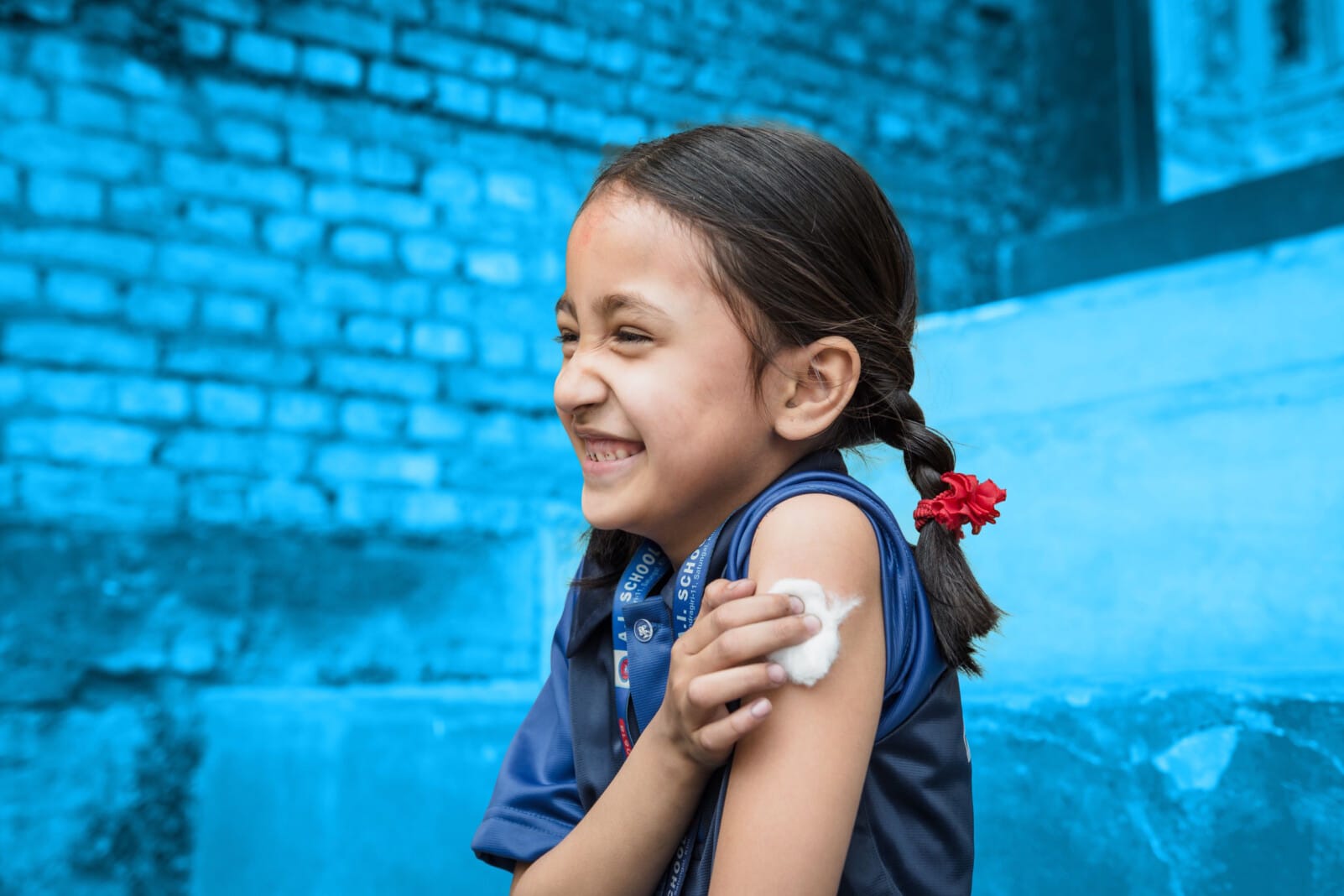
Immunization is one of the most cost-effective public health interventions, averting an estimated 4.4 million deaths yearly.[1]
In 2025, global coverage of the third dose of diphtheria-tetanus-pertussis (DTP3) vaccine – often used as a marker of how well countries are providing routine immunization services to children – stood at 85 per cent, as per the latest WHO and UNICEF estimates of national immunization coverage (WUENIC).
Despite ongoing efforts towards recovery and strengthening beyond pre-pandemic (2019) levels, a staggering 19.6 million children remained either unvaccinated or under-vaccinated in 2025. Furthermore, the number of children who did not receive any vaccines, often referred to as zero-dose children, reached 13.5 million – an increase from 12.8 million in 2019.
Measles, because of its high transmissibility, acts as a ‘canary in the coalmine’, quickly exposing immunity gaps in the population. The coverage of measles-containing vaccine (MCV) is thus often used as a tracer for protection. In 2025, coverage of the first dose of measles-containing vaccine (MCV1) increased to 86 per cent, with 19 million children not receiving the potentially life-saving vaccine. These figures fall short of the 95 per cent coverage needed to prevent outbreaks, reduce deaths and achieve elimination goals.
Access to life-saving vaccines to combat diseases is not universal and varies across regions and countries
The first dose of the diphtheria-tetanus-pertussis vaccine (DTP1) – a proxy indicator for access to immunization services – ranged from 49 per cent in Papua New Guinea and Yemen to 99 per cent in 41 countries, including 9 countries in Latin America and the Caribbean and 8 countries in the Middle East and North Africa. There were 25 countries with DTP1 coverage below 80 per cent, suggesting the need to enhance access to immunization services in these locations. Most of these countries were in Eastern and Southern Africa (n=5), East Asia and the Pacific (n=4) and West and Central Africa (n=4).
Globally, more than half (over 50 per cent) of zero-dose children are concentrated in just nine countries: Nigeria, the Democratic Republic of Congo, Yemen, India, Indonesia, Ethiopia, Afghanistan, Pakistan and Angola. However, it is important to note that some populous countries contribute heavily to global figures, despite high rates of immunization coverage. For instance, in 2025, India accounted for 696,000 zero-dose children (5 per cent of the global total) despite achieving 97 per cent coverage for a cohort of 22.6 million surviving infants.
In recent years, there has been a significant emphasis on reducing the overall number of zero-dose children, and this focus has yielded positive results, particularly in terms of DTP1 coverage. It is crucial to maintain these efforts and build upon them. However, the latest data emphasize the need to expand our approach by considering additional metrics that assess the risks and progress of immunization programmes, including vaccine coverage. This approach ensures that no child is left behind, as countries with larger infant populations often overshadow smaller cohort countries with extremely low vaccine coverage.
In 2025, 107 countries achieved at least 90 per cent coverage of DTP3 vaccine
The percentage of children receiving DTP3 – often used to measure the overall system strength to deliver infant vaccination – has a global target of 90 per cent as set by the Immunization Agenda 2030. In 2025, 107 countries (55 per cent) had achieved at least 90 per cent coverage of DTP3. This was fewer than in 2019, when 124 countries (64 per cent) met the target.
In 2025, South Asia had the highest DTP3 coverage at 92 per cent, while West and Central Africa had the lowest coverage at 71 per cent. South Asia was the only region to achieve at least 90 per cent coverage.
The Middle East and North Africa region recorded the largest increase in DTP3 coverage, rising from 79 per cent in 2024 to 83 per cent in 2025. Coverage also increased slightly in East Asia and Pacific, Europe and Central Asia and Eastern and Southern Africa, while remaining stable in Latin America and Caribbean, South Asia and West and Central Africa.
By 2025, only two of the seven UNICEF regions had achieved or surpassed their pre-pandemic DTP3 coverage. Latin America and Caribbean and South Asia were each 3 percentage points above their 2019 levels, while Middle East and North Africa and Europe and Central Asia remained the furthest behind, with coverage at 6 and 5 percentage points lower than in 2019, respectively.
Challenges to increasing vaccination coverage are numerous and persist in fragile states and those affected by conflict
Several factors contribute to the disruption of health systems and hinder the sustainable delivery of vaccination services. These factors include conflict, inadequate investment in national immunization programmes, shortages of vaccines as well as disease outbreaks. Among the children who remain unvaccinated or under-vaccinated, approximately 7.8 million infants (40 per cent) live in the 24 countries with fragility, conflict and violence (FCV).2 Children residing in such challenging circumstances are the most vulnerable to disease outbreaks and require urgent attention and support.
In 2025, there were 10 countries with DTP3 coverage of less than 60 per cent. Five of these countries have fragility, conflict and violence (Central African Republic, Haiti, Lebanon, Papua New Guinea and Yemen).3
To elevate global immunization levels, it is essential to prioritize efforts in countries with the highest absolute numbers of unvaccinated children. However, it is equally important to ensure that countries with low coverage rates, where children are most likely to miss out on immunization, receive the attention they need, particularly countries with smaller birth cohorts.
Pneumococcal and rotavirus vaccine coverage continues to expand, particularly in lower-middle-income countries
Thanks to the collaborative efforts of UNICEF, its partners and countries, vaccines are now safer and more accessible than ever before. The cost of fully immunizing a child in low-income countries has decreased from over US $24 in 2013 to just US $18 per child.4 Despite various challenges, countries have made progress in vaccine introductions. As of 2025, 167 countries (seven more than in 2024) included the pneumococcal conjugate vaccine in their immunization programmes, providing protection against pneumonia. Additionally, 138 (nine more than in 2024) countries have incorporated the rotavirus vaccine, which helps prevent diarrhoea.
Immunization throughout the life course provides significant societal, economic and productivity benefits, highlighting its importance as an essential intervention that should be prioritized by governments and policymakers
Human papillomavirus (HPV) is a common viral infection that can lead to cervical cancer. By the end of 2025, the HPV vaccine had been introduced in 162 countries. However, only 33 per cent of girls received the first dose of HPV vaccine (HPV1), and just 31 per cent received the final dose (HPVc). Although this represents an increase from 2024, greater efforts are needed to strengthen programme performance and expand vaccine introduction in countries that have not yet introduced HPV vaccination. These efforts are essential to improve coverage, particularly in countries with the highest burden of cervical cancer.
Preventing child deaths from preventable causes and ensuring children’s optimal health and well-being is a priority. The cost of a vaccine, often less than US $1, is significantly lower than the expenses associated with treating a sick child or combating disease outbreaks. Investing US $1 in childhood vaccination can potentially yield a return on investment of US $20 in low- and middle-income countries, demonstrating high returns on investment from immunization programmes.5
For more information about the cost and financing of vaccination, you can find additional details here.
In summary, although significant strides have been made in global immunization efforts, we are still not reaching every child with life-saving vaccines. The rise in zero-dose children since the pre-pandemic period and disparities in access to immunization services underscore the need for targeted interventions in fragile and conflict-affected regions. Despite these obstacles, the introduction of vaccines such as pneumococcal conjugate and rotavirus vaccines showcases potential for substantial improvements. To fully realize the societal, economic and health benefits of immunization, sustained investment and innovative strategies are essential, especially in countries with the highest numbers of unvaccinated children and countries with the lowest vaccine coverage.
[1] Carter et al. Modeling the Impact of Vaccination for the Immunization Agenda 2030: Deaths Averted Due to Vaccination Against 14 Pathogens in 194 Countries from 2021-2030 (April 20, 2021). Available at SSRN: https://ssrn.com/abstract=3830781 or http://dx.doi.org/10.2139/ssrn.3830781
[2] World Bank fragile, conflict and violence-affected environments (FCV), FY27, 1 July 2026: https://thedocs.worldbank.org/en/doc/d2e218e6 8a25ba7a31147a7455f35cae-0090082026/original/A1-FY27-FCV-List.pdf
[3] Centers for Disease Control and Prevention (CDC), Fast Facts on Global Immunization. https://www.cdc.gov/global-immunization/fast-facts/index.html, Updated: 14 July, 2025.
[4] Sim et al., Return On Investment From Immunization Against 10 Pathogens In 94 Low- And Middle-Income Countries, 2011–30, 2020.
Immunization data
Build your own dataset
Resources