Measuring mental health for adolescents and young people at the population level
Mental health conditions are a leading contributor to the burden of disease among adolescents and young people. Yet, data on the prevalence of adolescent and youth mental health conditions remain sparse, especially in low- and middle-income countries (LMICs). These data are urgently needed to guide strategic actions to address mental health needs among youth through effective policies and programmes.
The Measuring Mental Health among Adolescents and Young People at the Population level (MMAPP) initiative was developed by UNICEF and partners to address the critical lack of reliable data and tools for assessing adolescent and youth mental health at the population level. UNICEF’s MMAPP initiative aims to improve the quality and availability of population-level data on key policy-relevant mental health and psychosocial wellbeing domains for adolescents and young people aged 10-24.
What MMAPP provides
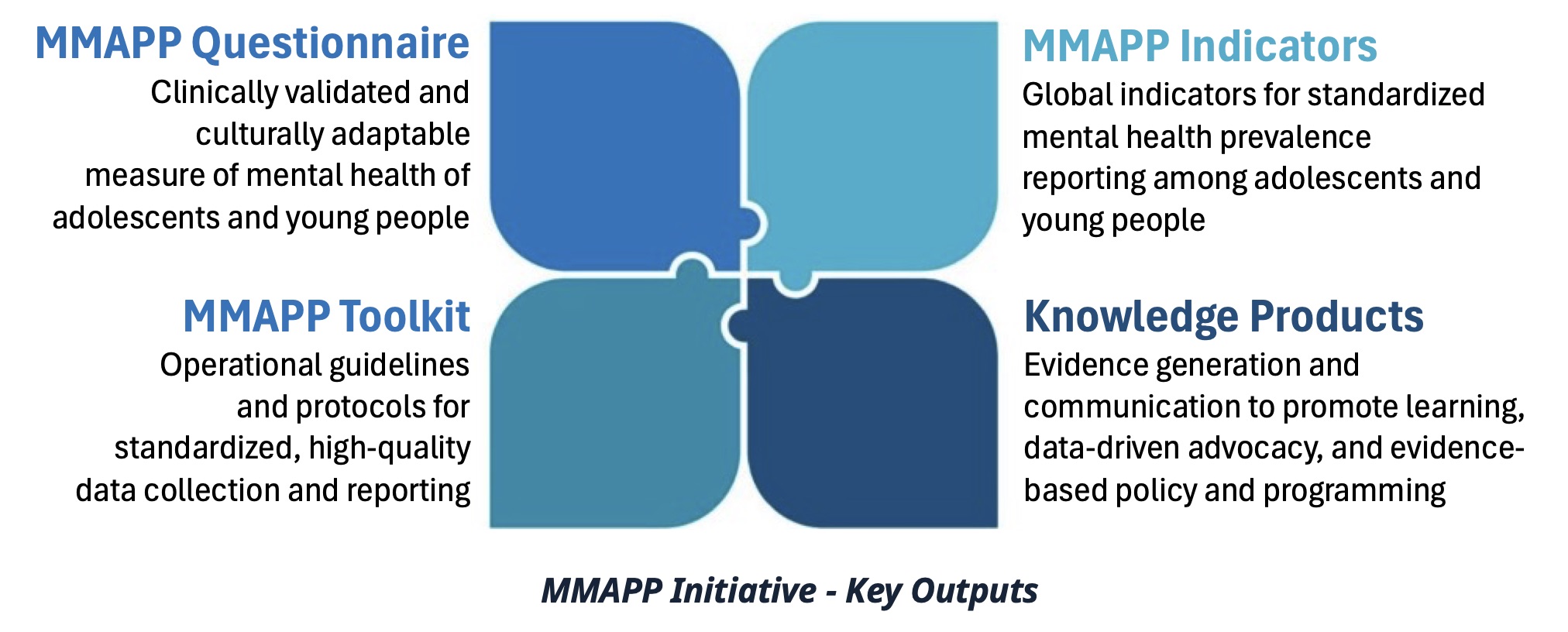
MMAPP has produced a set of tools and resources to support population-level measurement of adolescent and youth mental health.
MMAPP questionnaire
A standardized questionnaire for measuring key mental health domains among adolescents and young people
MMAPP indicators
A set of indicators to support standardized reporting of population-level prevalence rates
Operational guidance and protocols
Guidance to support cultural adaptation, implementation, data interpretation and reporting across countries and regions
Knowledge products and publications
Peer-reviewed publications and related resources to support learning, data use and advocacy
How MMAPP was developed
MMAPP was developed through a rigorous mixed-methods process, combining systematic translation and cultural adaptation with clinical validation using structured diagnostic interviews in Belize, Kenya, Nepal, Peru and South Africa.
Young people were meaningfully engaged throughout the process in each country, helping to ensure that the questionnaire and indicators reflect their voices, experiences and contexts.
MMAPP and MICS
Since 2023, the MMAPP Questionnaire has been integrated into UNICEF’s Multiple Indicator Cluster Surveys as a mental health module. This enables countries to generate nationally representative data on adolescent and youth mental health through an established household survey programme.
Four of the nine indicators developed through MMAPP have also been adopted as recommended adolescent health indicators by the Global Action for Measurement of Adolescent Health Advisory Group, led by WHO.
See the MMAPP Toolkit for a comprehensive overview of the MMAPP initiative, questionnaire, and indicators.
Resources