Adolescent HIV treatment
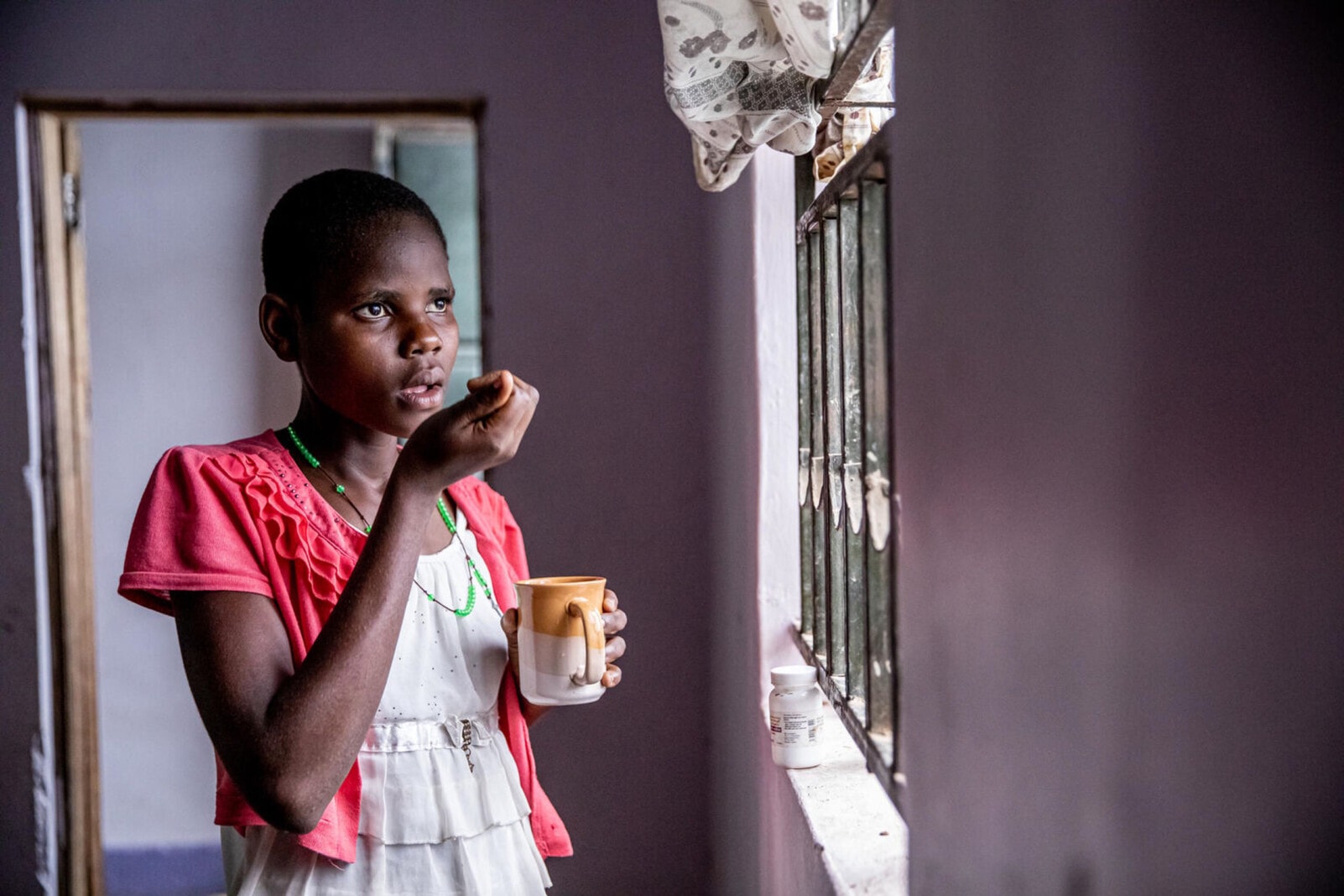
About six in ten adolescents 10-19 years of age living with HIV are on antiretroviral medications
Fast facts:
- Of the 1.57 million [1.2 million-2.0 million] adolescents aged 10-19 living with HIV globally, only 64 per cent, or 1.1 million, were receiving life-saving antiretroviral therapy (ART) in 2024.
- Of the 3.2 million [2.2 – 4.1 million] adolescents and young people aged 15-24 living with HIV globally, only 59 per cent, or 1.9 million, were receiving live-saving antiretroviral therapy (ART) in 2024.
According to WHO and UNAIDS, HIV among children and adolescents presents unique features that affect how diagnosis, treatment and care is provided across the age continuum of 0–19 years. Optimal antiretroviral drug regimens may require changes as children age and grow. Countries need to adapt and tailor service delivery between younger adolescents (10–14 years old) and older adolescents (15–19 years old) due to significant differences in health-seeking behaviour, number acquiring HIV infection and health outcomes including AIDS-related causes. Further, models of care to retain children and adolescents in treatment and ensure that they have suppressed viral loads must leverage different opportunities and address various challenges over the life-course. It is a well-known fact that children and adolescents have lower reported treatment coverage, adherence to treatment and viral suppression rates than older age groups.
Globally, adolescents 10-19 years account for about 4 per cent of all people living with HIV, 11 per cent of new HIV infections and 4 per cent of all AIDS-related deaths. In 2024, about 1 million adolescents 10-19 years, or 65 per cent of adolescents living with HIV globally, received antiretroviral treatment.
Globally, adolescents and young people aged 15-24 years account for about 8 per cent of all people living with HIV, 28 per cent of new HIV infections and 6 per cent of all AIDS-related deaths. In 2024, about 1.9 million adolescents and young people 15-24 years, or 59 per cent of adolescents living with HIV globally, received antiretroviral treatment.
Antiretroviral treatment coverage was 64 percent among adolescent girls and 65 percent among adolescent boys aged 10-19 years and 64 and 57 percent among adolescent girls and young women and adolescent boys and young men, respectively. In order to reach the 95-95-95 targets by 2030, there is an urgent need to ramp up treatment efforts among adolescents.
Antiretroviral treatment coverage among adolescents 10-19 years varies across regions, with the lowest treatment coverage in South Asia and Latin America and the Caribbean (31 and 43 per cent, respectively) and the highest in Eastern and Southern Africa (70 per cent).
Among adolescents and young people aged 15-24 years also varies across regions, with the lowest treatment coverage in the Middle East and North Africa (36 per cent) and the highest in Eastern and Southern Africa and West and Central Africa (68 and 63 per cent, respectively).
Globally, antiretroviral treatment coverage does not vary too drastically among adolescent boys and girls 10-19 years. Across all regions, the largest discrepancy between adolescent girls and boys is in South Asia the Middle East and North Africa where ART coverage is 13 percentage points higher among adolescent girls compared to adolescent boys. Among adolescents and young people, globally there is variation among girls and boys, with adolescent girls and young women having higher ART coverage compared to adolescent boys and young men by 7 percentage points. Such variation is also seen across all regions except for Eastern and Southern Africa where the coverage is comparable.
HIV/AIDS data
Build and download your own customisable dataset
Resources



Data sources + methodology
Global AIDS monitoring 2025
In order to monitor the HIV response and progress towards achieving global goals, countries submit national and subnational data on a host of indicators to the Global AIDS Monitoring (GAM) system. Annual submissions are reviewed and validated. Data consist of programmatic data for HIV prevention, testing and treatment. Other indicators require data from population-based surveys and surveys focused on key populations at risk of HIV infection.
For more information, click here.
UNAIDS Estimates and Spectrum’s AIDS Impact Model
Each year countries update their AIDS Impact Model in Avenir Health’s Spectrum software to develop the latest estimates for the HIV epidemic. Supported by UNAIDS, WHO and UNICEF these estimates are used to inform programme and policy decisions for HIV epidemic response.
Useful links:
Methods for HIV modelling are developed by the UNAIDS Reference Group on Estimates, Modelling and Projections.
All available data on HIV estimates are available at aidsinfo.unaids.org.
Nationally representative surveys
Multiple Indicator Cluster Surveys (MICS), Demographic and Health Surveys (DHS), AIDS Indicator Surveys (AIS), Population-based HIV Impact Assessments (PHIA) reproductive health surveys, sexual behaviour surveys and other nationally representative surveys are currently used to collect data on HIV and AIDS.