Measuring Adaptive Food and Nutrition under the Global Goal on Adaptation
Operationalizing Belém Adaptation Indicator e under Target 9(b) Decision 12/CMAA.7 COP30, Belém
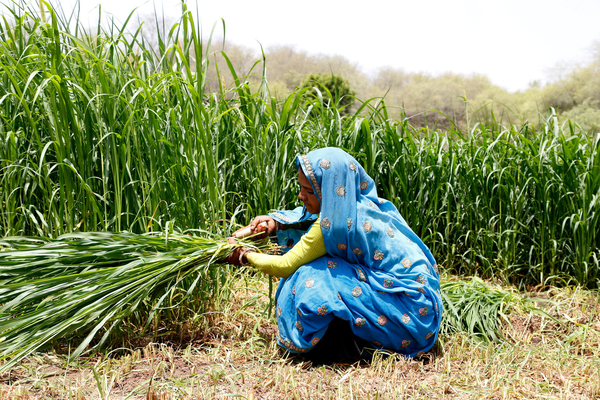
Climate hazards threaten to stall and even reverse progress towards ending global hunger. Between 2024 and 2050, climate change is projected to leave an additional 40 million children stunted and 28 million more wasted.
At COP30 in Belém, Parties adopted 59 Belém Adaptation Indicators to track progress towards the targets of the UAE Framework for Global Climate Resilience. Indicator 9(b)e is the only one that tracks progress on nutrition.
This brief from UNICEF, FAO and WHO sets out initial considerations for measuring indicator 9(b)e. It proposes building on existing Sustainable Development Goal (SDG) 2 indicators and developing measurement methodologies to inform COP32.
Key points
- Indicator 9(b)e intends to measure the proportion of the population with equitable access to adequate food and nutrition, including as an outcome of adaptation actions where applicable.
- The Intergovernmental Panel on Climate Change finds with high confidence that climate change has already increased food insecurity and malnutrition in many communities. Children, pregnant women and low-income households are most affected.
- Six established SDG 2.1 and 2.2 indicators can be used immediately to inform baseline data for indicator 9(b)e.
- Climate-specific disaggregation is not yet possible, and there is no globally agreed definition of climate adaptation relevant to food security and nutrition.
- UNICEF, FAO and WHO aim to support the development of methodological guidance for the indicator by COP32/CMA.9 in November 2027.
Why indicator 9(b)e matters
Indicator 9(b)e contributes to Target 9(b): by 2030, all Parties have advanced implementation of climate-resilient food and agricultural production and distribution systems and have progressively increased sustainable and regenerative production and equitable access to adequate food and nutrition for all.
Quality measurement of the impact of climate change adaptations on nutrition and food security is critical to determining whether those adaptations are effective.
Building on SDG 2 – zero hunger
A robust set of food security and nutrition indicators already exists under SDG targets 2.1 and 2.2:
- 2.1.1 Prevalence of undernourishment (FAO)
- 2.1.2 Prevalence of moderate or severe food insecurity, based on the Food Insecurity Experience Scale (FAO)
- 2.2.1 Prevalence of stunting among children under 5 (UNICEF and WHO)
- 2.2.2 Prevalence of wasting and overweight among children under 5 (UNICEF and WHO)
- 2.2.3 Prevalence of anaemia in women aged 15 to 49 years, by pregnancy status (WHO)
- 2.2.4 Prevalence of minimum dietary diversity among children aged 6 to 23 months and non-pregnant women aged 15 to 49 years (UNICEF and FAO)
Together these indicators reflect the nutrition and food security situation, including the impacts of climate hazards on populations. Nutrition outcome indicators are needed alongside food insecurity and other indicators because population nutrition is shaped by multiple complex drivers.
These indicators are monitored at national and, where possible, subnational levels through national surveillance systems and nationally representative surveys. Historical data are already publicly available, such as through the UNICEF–WHO–World Bank Group Joint Malnutrition Estimates.
The brief identifies three challenges for operationalization of indicator 9(b)e:
- Equitable access to adequate food and nutrition is multidimensional and a standard definition is needed.
- There is no globally agreed definition of climate adaptation actions relevant to food security and nutrition.
- Climate-specific disaggregation and impact studies are not yet consistently available.
A practical solution is needed to monitor climate adaptation actions across multiple systems and sectors and to better understand their links to nutrition and food security outcomes.