An Uneven Chance of Survival
Risk factors associated with under-five and neonatal mortality
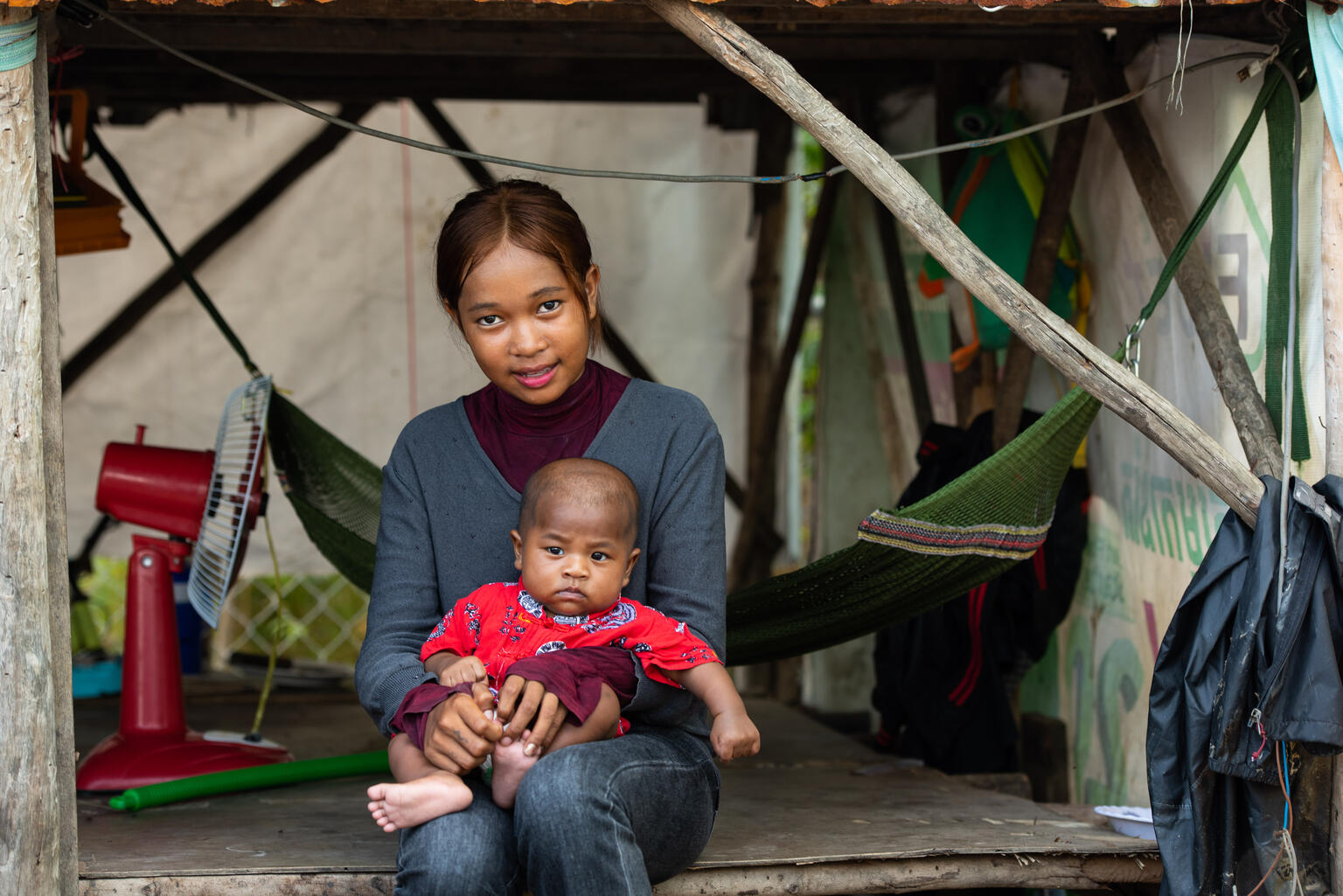
Children have no control over their family’s wealth, where they live, their mother’s education or age, or the circumstances of their birth. But these conditions can determine whether they survive to their fifth birthday.
An Uneven Chance of Survival looks beyond national child mortality rates to ask which children face the greatest risk of dying before age 5, and why. Drawing mainly on household survey data from low- and middle-income countries – which accounted for 95 per cent of under-five deaths in 2024 – the report identifies seven measurable risk factors. These span socio-economic circumstances and maternal fertility-related conditions.
UNICEF’s analysis uncovers sobering inequalities behind progress in child survival. While the global under-five mortality rate fell by more than half between 2000 and 2024, progress has not reached every child. Understanding these inequalities and some of the factors associated with them can help countries identify children at greatest risk and direct policies, services and investments where they are needed most.
Seven risk factors at a glance
Socio-economic factors
Household wealth
Children in the poorest households are twice* as likely to die before age 5 as children in the wealthiest households. The gap widens after the first month of life.
Mother’s education
Children born to mothers with the lowest levels of education – those who never attended school or only went as far as primary school – face a risk of death before age 5 that’s 1.9 times* that of children born to mothers with secondary or higher education.
Place of residence
If a child lives in a rural area, their under-five mortality risk is 1.6 times* that of a child growing up in an urban area.
Maternal fertility-related conditions
Mother’s age
Compared with children of mothers aged 20–29 years, under-five mortality rates are 1.3 times* as high for children of adolescent mothers and 1.4 times* as high for those whose mothers are older than 40.
Birth interval
Children born less than two years after a sibling face 2.1 times* the risk of dying before age 5 as those born three years after a sibling.
Birth order
Fourth-born or later children are 1.7 times* as likely to die before age 5 as second- or third-born children.
Birth size
Small or very small newborns risk of dying in the first month of life is 1.9 times* that of average or large newborns.
UNICEF’s analysis goes beyond these seven risk factors to examine differences in child survival by ethnicity and sex, intersecting fertility-related risks, subnational trends and stillbirth rates. These findings reinforce An Uneven Chance of Survival’s central message: National averages can hide large inequities, including in countries that have already met the SDG targets.
* Mortality risk comparisons are based on averages across the countries analysed.
Gaps that endure
Under-five mortality has declined across all wealth quintiles since 1990, and the absolute gap between the poorest and wealthiest has narrowed. The relative gap has not. Children in the poorest households still face around twice the risk of dying before age 5, and current trends suggest this will still be true in 2030.
If the SDG target for under-five mortality were met across all households – from the poorest to the richest – in the 106 countries analysed, 8.2 million children’s lives could be saved by 2030.
Why equity-focused data matter
We know many of the interventions that can protect children in the first five years of life. But not every child has equal access to them.
Disaggregated data help countries see these barriers, pinpoint where the greatest burdens lie and identify which children are being left behind. This critical information helps countries direct resources where they will have the greatest impact.
About the data
The analysis uses UN IGME estimates and nationally representative household surveys, including DHS and MICS, as well as vital registration data for selected upper-middle- and high-income countries. The number of countries covered varies by risk factor, from 106 countries for wealth to 40 for birth size. The analytical code and documentation are available on GitHub, and country data are available at childmortality.org.